How To Hang A Punching Bag: 4 Easy Ways In Installing One
Contents
- Where Is The Best Place To Hang A Punching Bag?
- What is the material made of?
- How much does it weigh?
- Workout Space
- How To Hang A Heavy Bag In 4 Easy Ways
- Hanging A Punching Bag Using A Ceiling Joist
- Hanging A Punching Bag On A Ceiling Mount
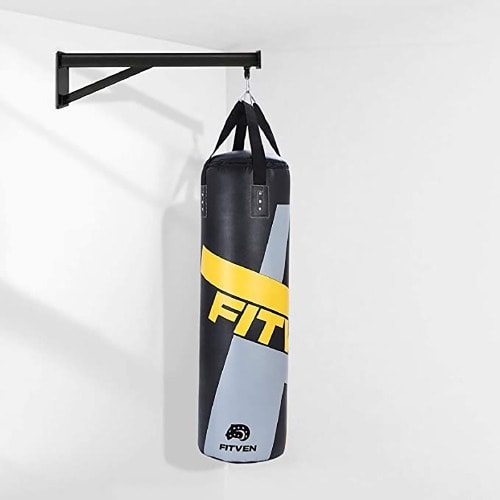
- How To Hang A Heavy Bag On A Wall
- Watch This!
- Alternative approach
- Use A Free Standing Punching Bag
- Watch This!
- Frequently Asked Questions
- Is it safe to hang a punching bag?
- Can you hang a punching bag in an apartment?
- How far off the ground should a punching bag be?
- Conclusion
- Sources
So you've decided to add a punching bag to your home gym.
Good choice. Bag work is a mix of cardio and upper-body work that builds coordination and endurance, and it can count toward the 150 minutes of moderate activity adults need each week.
Plus, it's a stress reliever.
A hanging bag doesn't take up much floor space. The hard part is deciding where and how to hang it, because a heavy bag needs solid support.

Wicked Workout On A Heavy Bag
Below we cover how to hang a punching bag from a ceiling joist, a ceiling mount or a wall mount, and when a freestanding bag makes more sense.
Where Is The Best Place To Hang A Punching Bag?
You can hang it almost anywhere with solid structure overhead, even in your living room if you live alone.
If you share your home, pick a spot where the noise won't bother anyone. Nobody wants to wake up to the thud of fists on a heavy bag.
Let's focus on your chosen space. Look around. How will you hang the bag, and what will hold its weight?
Here are the main things to check before you hang a punching bag:
What is the material made of?
Most bags have vinyl, synthetic leather or leather covers, and few are built to live outdoors. Hang yours somewhere dry and out of direct sun, such as a garage or basement, to keep the cover from cracking or growing mildew.
How much does it weigh?
A bag weighing 70 to 100 pounds is not something to hang from just any part of your ceiling.
The support also has to handle the force of your punches and kicks, which load the mount much harder than the bag's weight alone. If the support is too weak, the bag can tear loose and fall. Always hang it from structural framing, never from drywall or plaster alone.
Workout Space
Kickboxing needs more room than boxing, because the bag swings further and you need space for your kicks. Leave enough clear space all around the bag, away from walls, windows and other equipment.
After thinking about all that, decide whether to hang the bag from a ceiling joist, use a mount, or buy a freestanding heavy bag stand.
How To Hang A Heavy Bag In 4 Easy Ways
We'll look at the most practical solutions:
Hanging A Punching Bag Using A Ceiling Joist
It's the most popular method when hanging a heavy bag at home.
You need a solid wooden joist or beam to drill into. If drywall covers the joists, use a stud finder or tap the surface to locate the ceiling joist.
A heavy bag is a moving, or dynamic, load. Every punch jerks the mount, so the force on the joist is much higher than the bag's resting weight.
Ordinary ceiling joists are sized to carry the ceiling and light attic loads, not a swinging heavy bag. If you're not sure your framing can handle it, use a mount that spreads the load across several joists, or ask a contractor to check it.
If several beams run across your ceiling, choose the strongest one, such as a large exposed beam in a garage or basement.
You'll need:
- A drill
- Drill bits
- S-hook
- Boxing bag
- Chains
- Wrench
- Eyebolt
Step 1
Drill a pilot hole in the center of the joist where the bag will hang. Leave room for the bag to swing and for you to move around it, so stay away from doors and walls. Match the drill bit to the size of the eyebolt.
Step 2
Screw a heavy-duty eye lag bolt into the hole and tighten it with a wrench. It connects your bag to the beam, so it has to fit snugly.
Step 3
Attach the bag's chains to a swivel or snap hook. Most bags come with a chain set that clips to the D-rings on top of the bag.
Step 4
Hang the heavy bag on the eye bolt using the S-hook. You'll need a ladder and a helper to lift the bag from below while you reach the eyebolt.
Step 5
Test the bag with a few light punches. Check how far it swings and that the hardware stays secure, and recheck the bolt every few weeks.
Hanging A Punching Bag On A Ceiling Mount
A ceiling mount is a steel plate or bracket that bolts to the ceiling and gives you a hook for the bag.
It still has to be lag-bolted into joists, not just the drywall. Many mounts are designed to span two joists, which spreads the load.
Mark the joist locations so the mount's bolt holes line up with them. After installing the mount, attach the bag using chains as explained in step 3 above. Then wrap your hands or put on gloves and hit the bag to test the swivel and hardware.
How To Hang A Heavy Bag On A Wall
Do you want some ideas for a home gym or when you're hanging a punching bag in your garage? A wall mount holds the bag out from the wall, which frees up floor space in your garage or basement.
The difference from the ceiling methods is that you'll drill into the wall.
On a concrete or block wall, use concrete anchors rated for the load. On a framed wall, bolt the mount into the studs. Here's what to do:
- Mark the spots for the bolts.
- Drill holes in the wall.
- Attach the wall mount. It could be a wood plank or another sturdy wall mount that can hold your bag.
- Use the process we mentioned earlier to fix your boxing bag to the wall mount using an S-hook.
A wall mount screwed only into drywall will pull out. If you can't hit studs, a masonry wall is the better choice.
Watch This!
Alternative approach
Alternatively, use the method below:
Use A Free Standing Punching Bag
It's a simple option because you don't have to drill holes or worry about the ceiling. That makes it the most practical solution when renting.
The trade-off is stability. A freestanding punching bag can slide or rock as you hit it. Fill the base fully with water or sand, as the maker recommends, to keep it in place.
Watch This!
Frequently Asked Questions
Is it safe to hang a punching bag?
Yes, as long as it hangs from solid structure that can take the force of your punches. Never hang a heavy bag from drywall or plaster alone. Leave enough clear space around the bag so it can't hit anyone or anything as it swings.
Can you hang a punching bag in an apartment?
Yes, but check your lease first and pick a spot carefully. Noise and vibration travel to the units around you, and many landlords don't allow drilling into the ceiling.
Or skip the hardware hunt with a ready-made heavy bag hanger. For instance, the Yes4All Wall Mount is a heavy-gauge steel hanger. Check its listed weight rating against your bag, and bolt it into studs or masonry.

Yes4All Wall Mount (For Heavy Bag)
Alternatively, a freestanding bag works in a living room or bedroom with no drilling at all.
Another option is a lighter bag, say 35 pounds, instead of an 80-pound heavy bag. It's easier to hang in a small space, puts less load on the mount, and is easier to take down and store after your workout.
How far off the ground should a punching bag be?
Hang it at a height that matches your own body. A common guideline is to have the top of the bag about level with the top of your head, so you can practice head-level punches and kicks.
To plan this, measure the bag's length, including the chains or straps.
Then find the middle of the bag, where you'll hit it most. If you prefer to punch higher, raise the bag so that middle sits closer to your chin or eye level.
Before you drill, have a helper hold a broomstick or tape measure at the planned height to check where the top, middle and bottom of the bag will sit.
Conclusion
You could have your own boxing setup by tomorrow. First, choose your bag and the spot where it will hang. Use a joist, a ceiling mount bolted into joists, a wall mount anchored in studs or masonry, or a freestanding stand.
Second, secure the bag so it stays up no matter how hard you hit. And third, make sure it doesn't block doorways or swing into furniture, doors, or windows.
Sources
- Adult Activity: An Overview, Centers for Disease Control and Prevention