BJJ Gi VS No Gi: The Great Brazilian Jiu Jitsu Fight Over What's Better (Revealed)
Contents
When it comes to Brazilian Jiu-jitsu, you might think that wearing a gi vs not wearing one is just a stylistic choice.
But you’d be wrong.
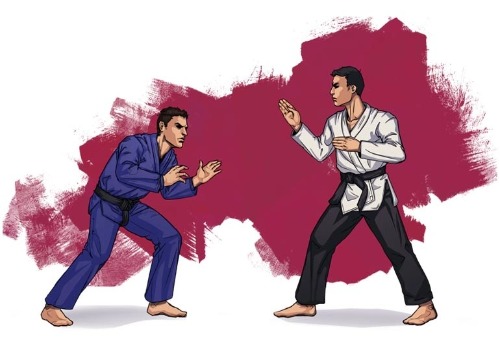
For Brazilian Jiu-Jitsu, gi vs no gi changes the style of fighting with different rules and strategies. But which one is the best for you and does wearing a gi change anything?
Main Differences Between ‘Gi’ vs ‘No Gi’
The main differences between ‘Gi Jiu-Jitsu’ vs ‘No Gi Jiu Jitsu’ are:
- Gi Jiu-Jitsu lets you grip the jacket, collar and pants, whereas No Gi Jiu-Jitsu relies on body grips like underhooks, wrist control and head control.
- Gi matches tend to be slower and more methodical, whereas No Gi matches tend to be faster and more scramble-heavy.
- Gi training demands a lot of grip endurance, whereas No Gi training rewards speed, wrestling and positional control.
- Both are beginner-friendly; many academies start new students in the gi, but plenty teach No Gi from day one.
Before we get deeper into the differences, let’s look at what Brazilian Jiu-Jitsu is and why the gi matters so much in the sport.
What is Brazilian Jiu-Jitsu?
Brazilian Jiu-Jitsu is a type of martial art that focuses on self-defense and grappling. Rather than striking, Jiu Jitsu focuses on taking your opponent to the ground and controlling them there. You grapple, improve your position, and try to force your opponent to submit with a joint lock or choke.
The sport and martial art also focus on leverage and bodyweight to defend yourself. Rather than trying to defeat a larger person in straight combat, a smaller person can use jiu jitsu to turn a foe’s size and strength against him. By taking the fight to the ground and using different locks and chokeholds, a smaller person can defeat a larger person.
Anyone can do Brazilian Jiu-Jitsu, regardless of size or strength. The biggest obstacle standing in the way of anyone wanting to learn is whether to do BJJ gi vs no gi.
Wearing a Gi or No Gi?
So what is a gi in jiu-jitsu? A Gi is a cotton (or cotton-like) uniform that consists of a heavy woven jacket, pants, and a belt in your rank color.
In IBJJF competition, the gi must be white, royal blue or black, with the top and pants in the same color. A good gi allows full freedom of movement and holds up to countless hours on the mat.
I mentioned "colored belt" above. The best BJJ belt you can wear is not limited to being colorful only. You can find ones that are tournament-level belts and don't forget that you want to look for the best quality.
There’s a lot of advantages to using a Gi, especially within Brazilian Jiu Jitsu. However, not wearing a gi can be beneficial as well.
If you choose to go this route, then you’ll typically wear a rash guard and shorts, often with compression spats. It almost feels like wearing a wetsuit or bodysuit.
No Gi clothing is lighter and cooler than a gi, and it's easy to wash. For IBJJF No Gi events, the rash guard must be black, white, or black and white with at least 10% of your belt color.
Both options cover the same core skills, but they change how you grip and move, so it's worth understanding the differences before you start.
Differences in Combat
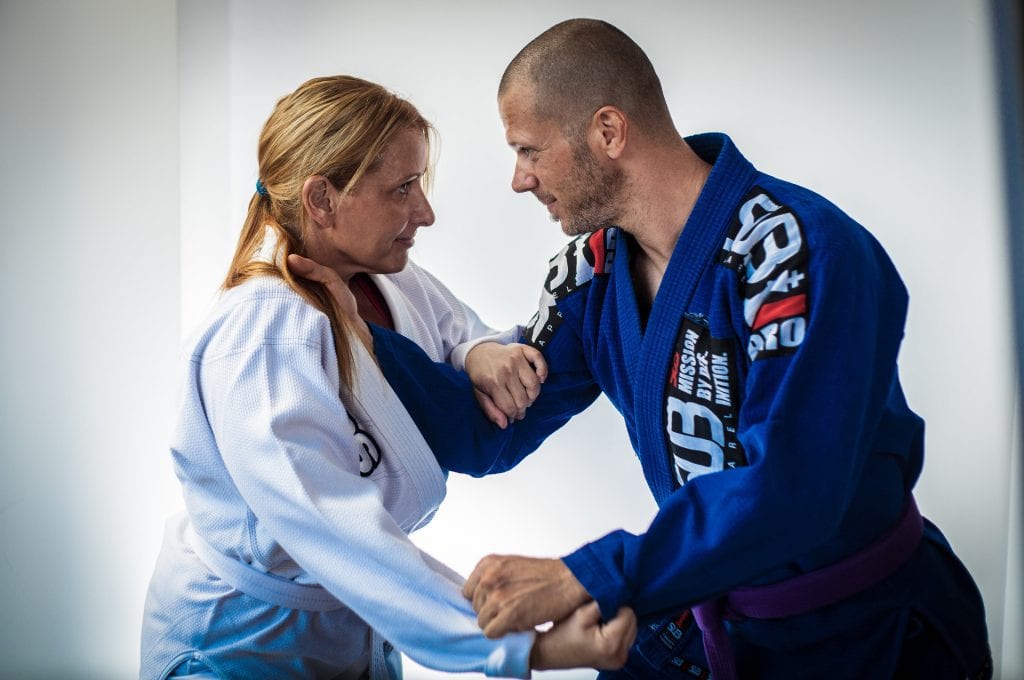
The one benefit that a Gi can provide both you and your opponent in a fight is something to grab onto. Gis aren’t skintight, and the loose fabric can aid in grappling your opponent. It’s often much easier to get a hold on clothing than to hold onto skin, and you can easily use your opponent’s Gi against them.
Wearing a Gi greatly expands the tactics you can bring to the fight, but your opponent can use those tactics against you.
Gi Jiu Jitsu is often slower paced than No Gi because grips on the cloth make it easier to stall and control. Collar chokes are among the most common gi finishes, and many techniques revolve around using your opponent’s clothes against them.
For No Gi training and combat, the clothing is very skin tight. With less loose clothing to grab (if any) speed and gaining the initiative over your opponent is very important. The No Gi matches are often much faster as both opponents try to grapple with one another and force each other to the ground.
There’s also a greater dependence on body position and proper leverage since body grips are easier to break than a tight grip on someone’s clothing. Sweat makes No Gi grips even more slippery.
The fundamentals, such as positions, escapes and most submissions, stay the same regardless of which one you pick.
Which One Is Best?
It’s a very fierce debate over if you should do BJJ gi vs no gi, but you can’t deny that each one has some advantages and disadvantages for beginners to the sport.
Gis are often the first choice for many beginners, as the extra friction slows the action down and makes it easier to learn positions and escapes. You'll also learn lapel and collar techniques, something that doesn’t apply to No Gi training.
Gi training builds serious grip strength and forearm endurance, and many people find the slower pace helps them learn technique.
No Gi Training
Training without a gi is faster-paced and rewards speed and scrambling. No Gi rolls can also be a hard test of your cardio. Also, since you’ll always need to be on the lookout for your opponent’s next move, it can help with your awareness.
You’ll need to learn takedowns and other wrestling abilities because you won’t be able to rely on merely pulling clothes. Training without a Gi is a lot like real life, especially if you find yourself in a position where you need to use jiu-jitsu to defend yourself. The chances are that your opponent will not be wearing a Gi!
Which Is Better?
Sadly, the answer to this question of should you have a gi vs no gi jiu jitsu is, it depends. Most professionals train in both styles of Jiu-Jitsu, and both types of training have their benefits.
Training with a Gi builds grip strength and a methodical, technical game, while training without a Gi sharpens your speed, wrestling and body control.
You can also focus on where you want to go in your Jiu-Jitsu career. If you’re going to make it more than a hobby, figure out what that looks like. Do you want to focus on winning Gi based competitions or look into other forms of wrestling? That will certainly influence which side of the debate that you fall on.
Going with a Gi or without one both have benefits. Before you decide to pick a side in the gi vs no gi debate, taking a few classes in both Brazilian Jiu-Jitsu styles will make you a well-rounded fighter. Why not do both and see which one works for you?
Sources
- Uniform, International Brazilian Jiu-Jitsu Federation (IBJJF)
- Rules Book, International Brazilian Jiu-Jitsu Federation (IBJJF)