Muay Thai Vs BJJ: A Comprehensive Breakdown - Which One Is The Best?
Contents
- Main Differences Between Muay Thai vs BJJ
- Muay Thai History
- Muay Thai Strong Points
- Muay Thai Weak Points
- Brazilian Jiu Jitsu (BJJ) History
- BJJ Strong Points
- BJJ Weak Points
- Muay Thai Vs BJJ: Which is More Effective for Mixed Martial Art?
- Muay Thai VS BJJ: Which Wins In A Street Fight?
- Muay Thai vs Jiu Jitsu: Which Is The Best?
- Sources
Pheeew... The BJJ vs Muay Thai battle would probably never end.
Martial arts supremacy debates go back at least to Bruce Lee's era, and they've inspired real challenge matches and movies like Ip Man 4.
And...
It's still a hot topic, whether you're just arguing with friends or trying to pick an art to learn.
But I'll be straightforward:
There's no “one size fits all" answer to the question. That's why the Muay Thai vs BJJ duel never really gets a clear winner.
Needless to say, I'll point out the few differences between Muay Thai and BJJ, then you can decide which technique fits your style or would be more effective in sticky icky situations.
Warning: Don't confidently get into street fights thinking martial arts would always save you.
Main Differences Between Muay Thai vs BJJ
The main differences are:
- Muay Thai is a striking sport, whereas BJJ is a grappling martial art
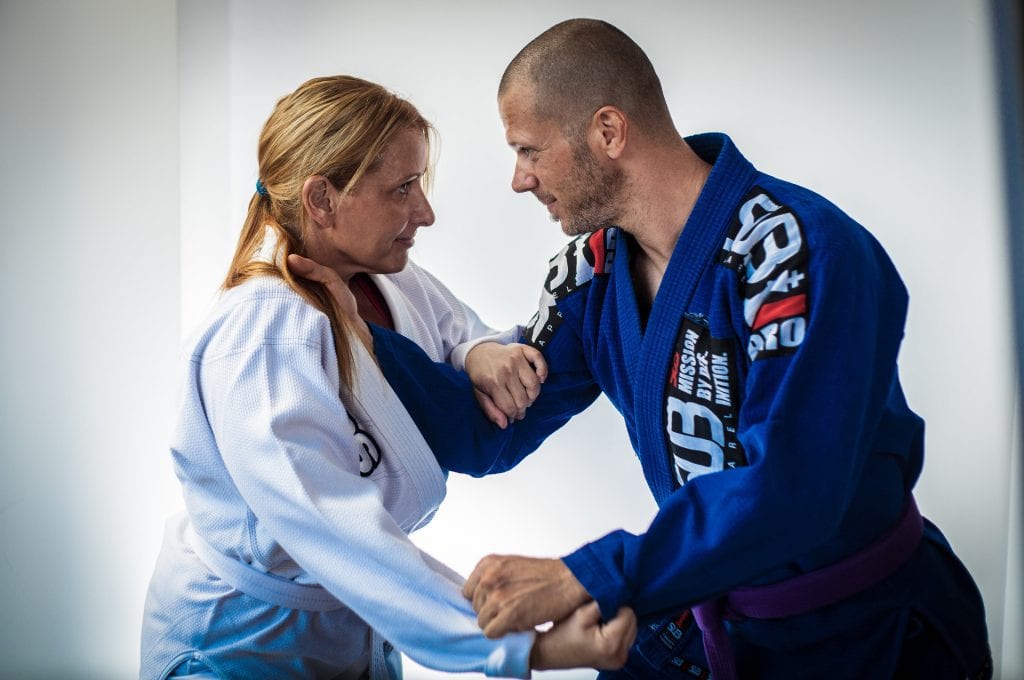
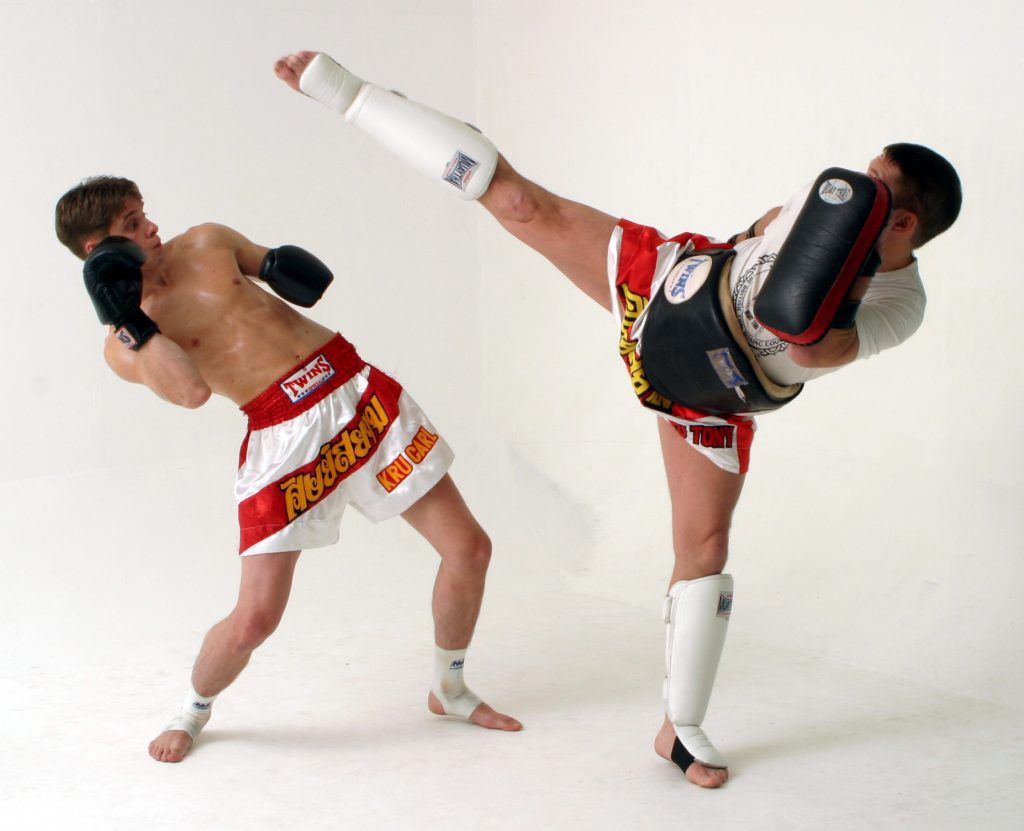
- Muay Thai fighters wear shorts and gloves, whereas BJJ grapplers wear a gi, or a rash guard and shorts for no-gi BJJ
- Muay Thai has centuries-old roots in Thailand, whereas BJJ developed in Brazil in the 20th century and became famous through the UFC in the 1990s
- Muay Thai uses "the eight limbs" (fists, elbows, knees, and shins), whereas BJJ relies on takedowns, positions, and submissions
- Muay Thai fighters clinch to land knees and elbows or throw opponents off balance, whereas BJJ fighters clinch to take the fight to the ground for a choke or joint lock
- Muay Thai means taking hard strikes, with more cuts, bruises, and head contact, whereas in BJJ you can tap before a submission does serious damage
This is only a quick breakdown. If you're trying to pick one as exercise or for competition, it boils down to your personal preference.
But I'll go through the nitty-gritty of each martial art a bit to give you an idea of what you'd be getting into.
Muay Thai History
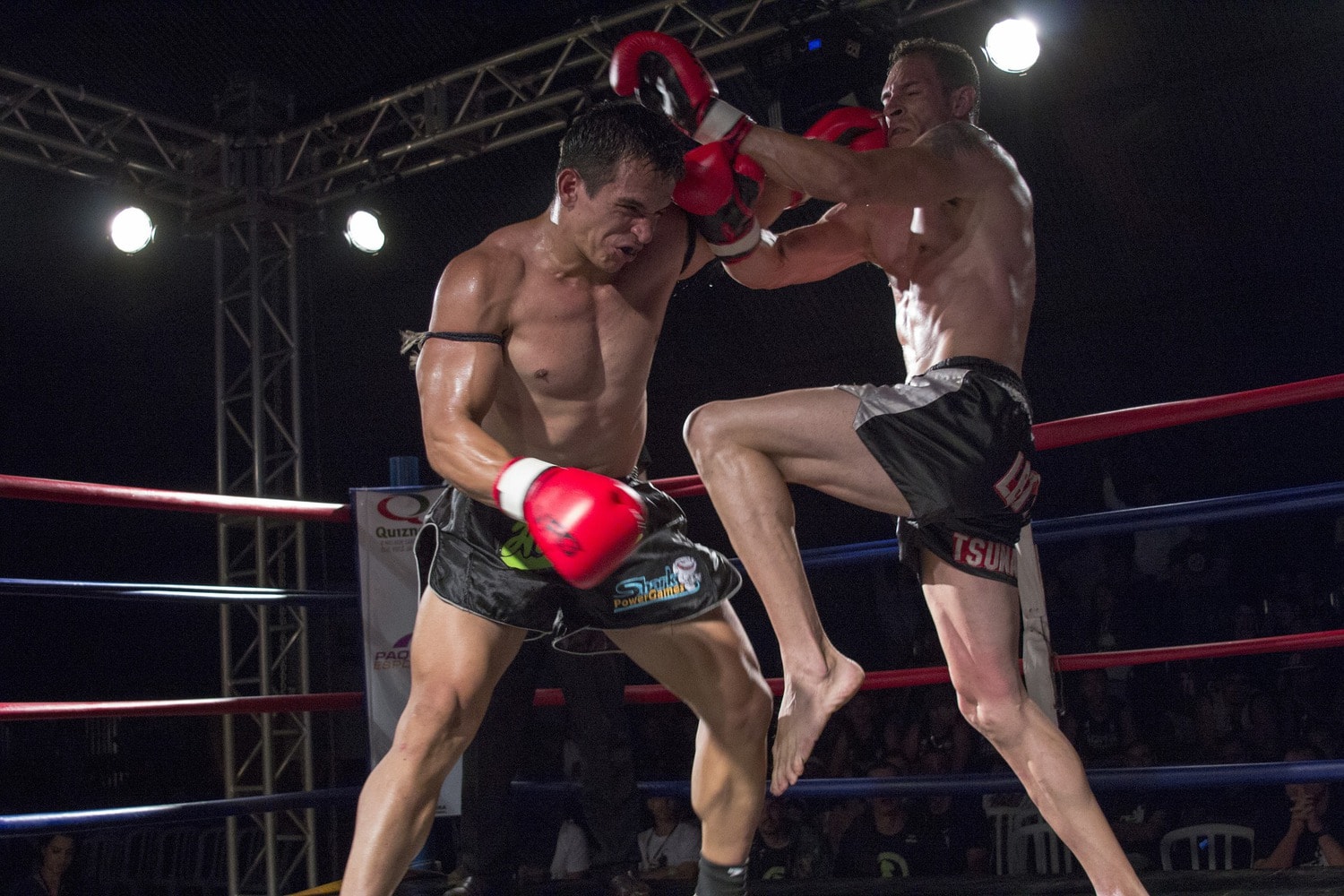
Muay Thai, aka Thai boxing, has roots in the battlefield fighting methods of old Siam (Thailand).
It's closely tied to the weapon-based art of Krabi Krabong, and early versions were used in actual combat.
And then, it gradually became a sport.
Bare-fisted fighters started wearing ropes on their knuckles and forearms for cushion. During these periods, Muay Thai was called different names like Muay, Muay khat chueak, toi Muay.
Later on, it was incorporated into Thai culture by passionate kings, with performances at local festivals and celebrations.
The Thai, to date, practice Muay as a form of exercise, sport, self-defense, recreation, self-development, and so on. And it's now the nation's national sport.
It spread worldwide in the late 20th century as kickboxing and MMA fighters adopted its techniques. Amateur Muay Thai now has an international federation, IFMA, whose rules require headgear and shin and elbow guards in competition.
Muay Thai Strong Points
Muay Thai, like any martial art, isn't just about fun. It's something you have to be eager to practice and master. Here are a few points about Muay Thai that stand out.
Easier to Pick Up The Techniques
Muay Thai is an all-strike combat sport. It uses all eight limbs of the human body.
So you'll learn to use all these body parts as weapons.
The good news is that the basics are easy to start. Within a couple of weeks, you should be able to throw one or two moves with decent form.
Just don't forget to put on your best gloves for Muay Thai because it can spell some difference in performance if you just wear any other type of gloves.
Of course, at this stage, you'll be nowhere close to mastering the moves.
Frees the Limbs
Striking with your eight limbs would also require you to build flexibility and mobility in your body.
If these appeal to you, Muay Thai training classes give the workout routines that build them, and other physical attributes.
In training, you'll be likely faced with agility, endurance, and footwork drills as well. This routine can be tiring and makes a fun way to keep fit.
Cool Guy Winner of BJJ vs Muay Thai Duel
I might be biased with this point since I really don't like dealing with a gi. Muay Thai fighters wear better-looking gear than BJJ and other martial arts.
Of course, there's no-gi jiu-jitsu, where you only wear a rash guard and shorts. And for boxing, you only need boxing shorts.
By the way, boxing being mentioned, what's the difference between BJJ vs boxing? A little similarity perhaps is that they both don't wear gis. But what sets them apart?
But I still prefer the outlook of the flashy shorts, rash guard, and gloves in Muay Thai. If it's not your thing, there are inconspicuous outfits too for sure.
Muay Thai Weak Points
More Physical
What really separates Muay Thai from BJJ is contact. You learn to check kicks with your shins and block strikes with your arms, so even good defense hurts.
Strikes that land can be painful, and hard sparring to the head carries a concussion risk. Good gyms keep most sparring light and require headgear, gloves, shin guards, and a mouthguard.
Not Exactly A Wide Array of Techniques
Even with eight limbs, Muay Thai has fewer techniques to learn than BJJ.
For some folks, it can become a routine easily, especially if they aren't competing.
In short, compared to BJJ, Muay Thai is a shortcoming in the variations of techniques you can learn.
Brazilian Jiu Jitsu (BJJ) History
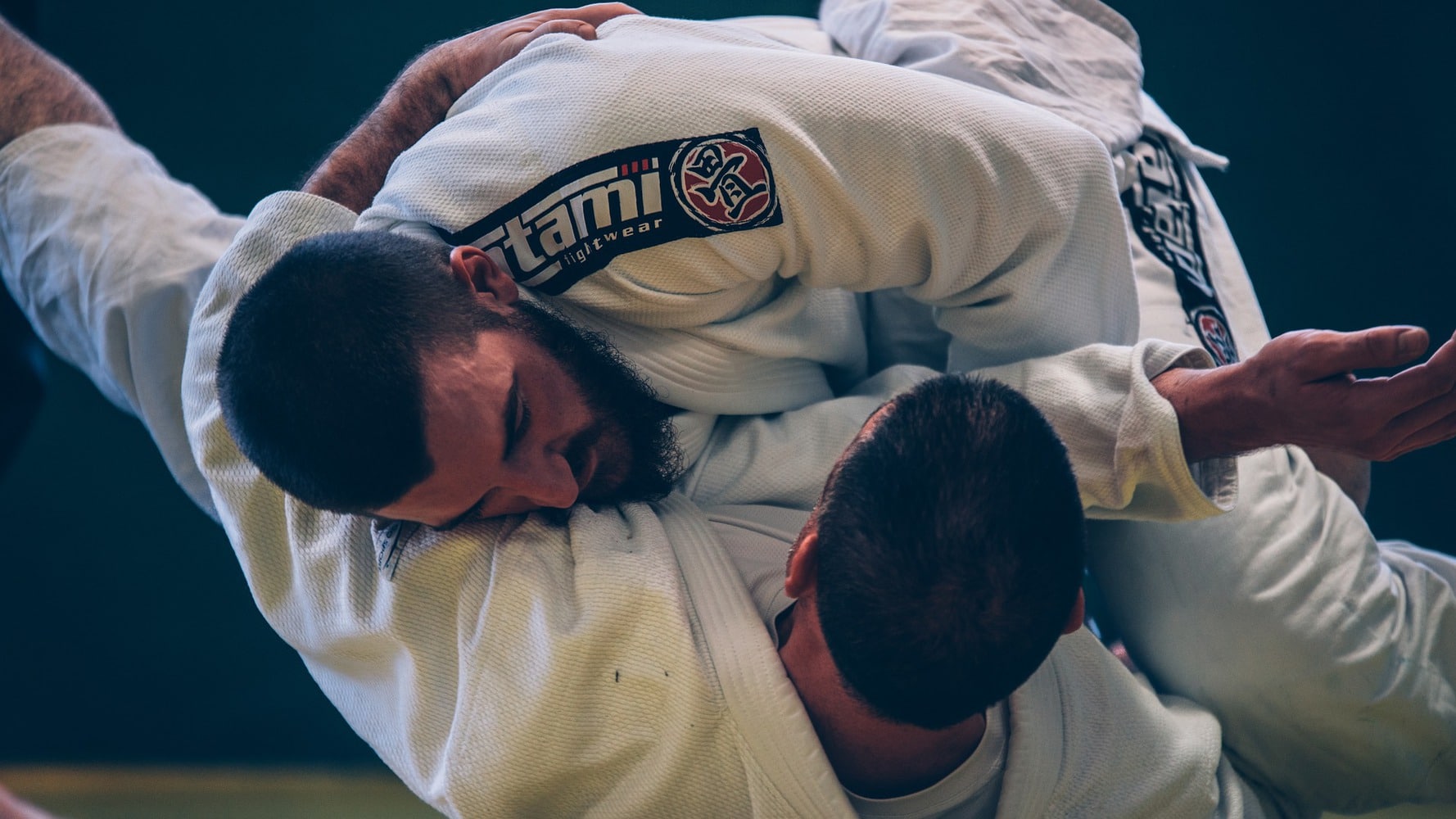
BJJ grew out of judo and Japanese jujutsu.
Its best-known founders are the Gracie brothers. Carlos Gracie learned from Mitsuyo Maeda, a Japanese judo expert who settled in Brazil in the 1910s, and passed the art to his brothers, including Helio.
Helio, who was small and light, refined techniques that relied on leverage and ground control instead of strength.
With this, the subtle, but powerful art of Brazilian Jiu Jitsu was born.
But it wasn't until November 1993, that Brazilian Jiu Jitsu took the world by storm. Royce Gracie, son of Helio, did his father and Gracie family proud.
He competed in the first UFC tournament to showcase Gracie jiu-jitsu, which was little known outside Brazil at the time. He beat three larger opponents in one night to win the tournament.
BJJ Strong Points
Lots of Competition Opportunities
BJJ tournaments are easy to find in most areas, often several a month, and they're open to all ages and belt levels.
In short, if you enjoy the prospect of a competitive atmosphere, BJJ hits the spot.
Great Sport for Kids
If you've got kids, BJJ might be the better fit, since there are no strikes to the head.
That doesn't mean BJJ is risk-free. Joint injuries happen, and close contact on mats can spread skin infections, so look for a gym that keeps mats clean and enforces hygiene rules.
Gives a Good Workout
Perhaps the most reason people take martial arts these days is fitness and the thrill of it. And BJJ doesn't slack at all.
I've seen quite a number of transformation stories from amateur BJJ fighters, but numbers also speak the same.
Some gyms claim you'll burn over 1000 calories in a 1-hour class, but that's on the high side. Harvard Health estimates martial arts burn about 600 to 840 calories an hour for people weighing 125 to 185 pounds.
That's comparable to Muay Thai, boxing, and other "tough" workouts.
I'm stressing this because many would look at grappling on the surface and say "it can't be that tasking."
Arsenal of Submission Techniques
It seems unbelievable at first since all the business is done on the "mat." But BJJ has got more than a handful of submission and grappling techniques you can learn.
They aren't as flashy as Muay Thai strikes, but they can end a fight just as decisively.
Here's Royce Gracie making a bigger opponent tap:
BJJ Weak Points
Tough Mastery
If you want to get into BJJ to get a black belt, be ready to spend years training.
On average, it could take 10 years to get a black belt in BJJ. Even experienced judoka usually need several years.
Muay Thai in Thailand has no belt system at all, just fight records, although some gyms abroad use grading systems.
Muay Thai Vs BJJ: Which is More Effective for Mixed Martial Art?
It's hard to pitch these two fighting styles individually in MMA. This is especially true in the current competition scene.
Put simply, to survive in MMA, you need to be proficient with both styles considerably.
Unlike the early days of MMA, you can't afford to be a one-dimensional fighter now.
Imagine this:
You are up against a guy who's skilled at BJJ and kickboxing. You, on the other hand, only know Muay Thai.
He shoots for a takedown. Since you never learned takedown defense, he gets you to the ground and finishes with a choke.
You don't want to be that guy. The same thing works in reverse: a pure BJJ player who can't strike or close the distance safely will struggle against a good kickboxer.
You can be a master at one and still be decent in the other enough to be skilled at the basics.
Muay Thai VS BJJ: Which Wins In A Street Fight?
Here we go again. "Which is a better martial art to win a street fight?"
Of all of the Muay Thai vs BJJ arguments I come across, this is undeniably the hottest topic about the duel.
But why train to get into a street fight in the first place?
Whatever your style, walk away from street fights whenever you can. Real fights can involve weapons, multiple attackers, and hard ground.
If a fight can't be avoided, there's still no clear winner. You might end up on the ground and need grappling, while striking can help you create space and escape. Both have a place.
Muay Thai vs Jiu Jitsu: Which Is The Best?
It comes down to personal preference. Try a class of each and see which one you'd stick with.
If you want to compete in MMA, you'll need both.
Sources
- Calories burned in 30 minutes for people of three different weights, Harvard Health Publishing
- Concussion Basics, CDC
- IFMA Rules and Regulations, International Federation of Muaythai Associations